Word Trails NETFLIX
Netflix, Inc.Word
4.7697.00 Reviews
- Version
- 1.30.0
- Installs
- 1.00M
- Age Rating
- Everyone
Screenshots
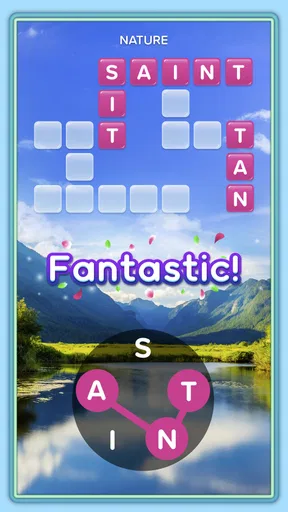
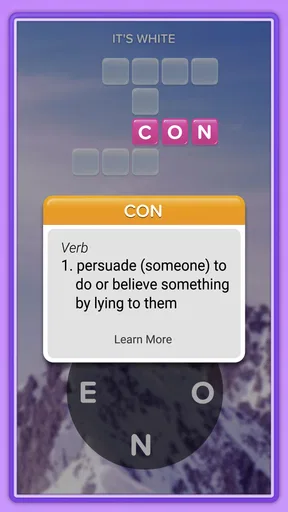
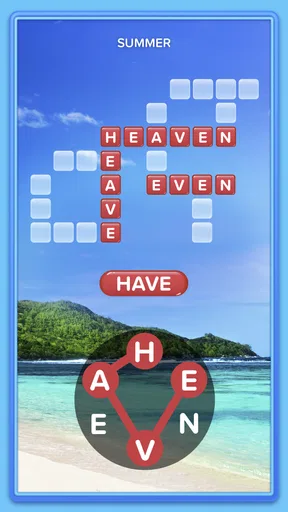
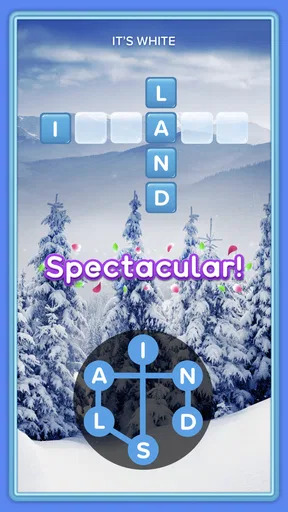
Our Review of Word Trails NETFLIX
 Analysis by Appyee
Word Trails NETFLIX is the kind of word game I open when I want something quiet but still mentally active. It takes the familiar pleasure of finding words and gives it a more structured, brain-training feel, so each short session has a clear purpose instead of becoming an endless stream of unrelated puzzles. I found it easy to understand within minutes, yet it still left room for deliberate thinking when the available letters stopped looking obvious.
That balance is the main reason I would recommend it to someone who enjoys word puzzles but does not necessarily want a competitive, noisy, or heavily social experience. It is a free game from Netflix, Inc., rated for Everyone, and its broad appeal is reflected in a 4.7 average from around 26 thousand ratings. The important question, though, is not whether it is popular. It is whether the structure gives you a good reason to return after the novelty of the first few puzzles fades.
How the first puzzles create a reason to continue
The early experience works because the goal is immediately readable. You are not asked to learn a complicated rule set before playing. The word-focused format lets me concentrate on recognizing possibilities, testing my vocabulary, and deciding whether a shorter answer is useful or whether I should keep looking for something more demanding. That low barrier matters on a phone, where a game has to explain itself quickly.
I also like that the opening progress feels connected to solving rather than to learning a separate control system. Every completed puzzle gives me a small sense of closure, while the next challenge provides a natural invitation to continue. This is a better fit for brief breaks than a game that expects me to remember a large map, manage several resources, or follow a long story.
For a realistic everyday use case, I can see myself playing while waiting for an appointment or during a short commute when I want something more engaging than scrolling. A single puzzle can become a compact mental reset: I focus on letter patterns, try a different angle when I get stuck, and stop once the session feels complete. That makes the game particularly suitable for people who prefer their entertainment in small, self-contained portions.
The early goals are also accessible to mixed-skill players. Someone who enjoys casual vocabulary games can begin by spotting familiar words, while a more experienced player can immediately start looking for less obvious combinations. I would not describe the opening as intimidating. Its strength is that it lets the player feel competent before asking for more patience.
What progress feels like during normal play
The strongest progress signal is the puzzle itself being completed. That sounds simple, but it is important in this category. I always know what I am working toward, and the act of filling the available word paths gives the session a visible shape. Instead of wondering whether I am improving in an abstract way, I can tell when I have handled a difficult arrangement of letters or recovered after an unproductive guess.
Unlocks and advancement matter because they turn individual puzzles into a longer journey. In my experience, the appeal is less about a dramatic transformation of the game and more about having another destination after the current challenge. That creates a gentle rhythm: solve, see progress, face a new arrangement, and decide whether I have enough attention for one more.
This approach avoids one common problem with simple word games: the feeling that every round is interchangeable. The progression gives solved puzzles some context. I am not merely completing isolated exercises; I am moving through a sequence that encourages me to notice how my confidence changes as the challenges become less immediately readable.
One useful habit is to treat the progress path as a pacing tool rather than a demand to play continuously. If I am solving quickly, I can continue while the game feels fresh. If I start making random attempts, that is a good point to pause. Because the core loop is based on thought rather than reflexes, stopping before frustration builds does not feel like failure. It preserves the satisfaction of returning later with a clearer mind.
The current version is 1.30.0, and the game has passed one million installs. Those figures tell me that it has found an audience beyond a tiny niche, but they do not change the personal experience: its progress is most rewarding for players who enjoy gradual advancement and visible puzzle completion, not for people who need elaborate character upgrades or a large collection of side activities.
Where the difficulty curve becomes interesting
Word Trails NETFLIX is at its best when the letters look familiar but the answer does not arrive instantly. That middle ground creates the right kind of pressure. I am not relying purely on obscure vocabulary, yet I cannot always solve a puzzle by grabbing the first word that comes to mind. The game encourages me to rearrange my thinking and inspect patterns I initially ignored.
The difficulty curve works because it asks for more than recognition. A player may know plenty of words and still hesitate when the arrangement does not point clearly toward them. This is where the brain-training angle becomes meaningful in practice. The exercise is not just memorizing definitions; it is switching between possible letter groupings, resisting premature conclusions, and using the structure of the puzzle to guide the next attempt.
My practical advice is to avoid locking onto one apparent answer too early. When I get stuck, I mentally separate the letters into familiar beginnings, endings, and shorter fragments rather than staring at the whole arrangement. I also find it useful to search for the simplest plausible word first, because an easy discovery can reveal how the remaining letters are intended to work. This is a small change in approach, but it makes the harder moments feel more solvable.
That said, the challenge will not suit everyone equally. Players with a very broad vocabulary may find some early stages too gentle, while people who dislike wordplay can experience the same puzzles as slow rather than relaxing. There is no universal difficulty level that makes every session satisfying. The game is better for thoughtful pattern solving than for rapid-fire testing.
Another trade-off is that a word puzzle can feel subjective when the player believes a possible answer should count but the puzzle is clearly looking for a different path. Even without turning that into a major complaint, it is worth knowing that the experience depends on accepting the intended structure. If you want a dictionary-style game where experimenting with any valid word is the whole point, a more open-ended word finder may be a better choice.
Does the pacing encourage healthy return sessions?
The pacing is deliberately calmer than games built around constant rewards. I do not feel pushed to react quickly; the main pressure comes from wanting to finish the current puzzle or see what comes next. That makes the game comfortable for casual use, but it also means the retention appeal depends heavily on whether you personally enjoy the act of solving.
For me, the return loop is strongest when I have left a puzzle with one or two possibilities still unresolved. The unfinished thought stays in the back of my mind, and coming back to it can feel like picking up a small mental thread. This is more satisfying than a forced daily routine because the motivation comes from curiosity rather than from fear of losing a streak or missing a timed opportunity.
The limitation is that players who need constant novelty may eventually find the rhythm too restrained. The game’s identity is built around word challenges and gradual progress, so it is not trying to compete with action games, social games, or large adventure titles that provide a new type of event every few minutes. I would skip it if my main goal were excitement, fast reactions, or a strong narrative hook.
I also would not choose it as a replacement for a serious language-learning course. Solving words can strengthen attention and vocabulary awareness, but the experience is still a game. It does not turn each session into a structured lesson with explanations, practice categories, or a formal study plan. For casual mental exercise it works well; for systematic language acquisition, a dedicated learning app is the more appropriate tool.
The age rating of Everyone makes it easy to recommend in a family setting, especially when the household wants a quiet puzzle that does not depend on mature themes. Still, younger players may need encouragement if they encounter vocabulary beyond their comfort zone. The game can support curiosity, but it cannot remove the natural gap between a beginner’s word knowledge and an adult player’s experience.
How it compares with familiar word-game alternatives
Compared with a traditional crossword app, Word Trails NETFLIX feels more direct. Crosswords often rely on clues, general knowledge, and a grid that can become a large project. Here, the emphasis is more concentrated on manipulating and recognizing words. I prefer this when I want a challenge that begins quickly and does not require me to maintain several clue threads at once.
Compared with a daily word guessing game, it offers a different kind of satisfaction. A daily format can create a strong ritual, but it also limits the player to a particular cadence and often centers the experience on one headline puzzle. This game is a better fit when I want to continue solving beyond a single daily moment and let my available time determine the length of the session.
Compared with an anagram game that rewards speed, its appeal is more reflective. Fast anagram titles can be exciting when I want pressure, but they may turn vocabulary into a reflex test. Word Trails NETFLIX gives me more room to think, which is useful when I am tired or want the puzzle to feel restorative rather than competitive.
There is also a practical advantage for people already using Netflix’s gaming catalog: the developer is Netflix, Inc., and the game is free. That removes the hesitation I often have with a word title that immediately asks me to choose between a limited trial and a purchase. The better reason to try it, however, is not simply the price. It is the combination of approachable puzzles, a clear progression path, and a pace that works in short sessions.
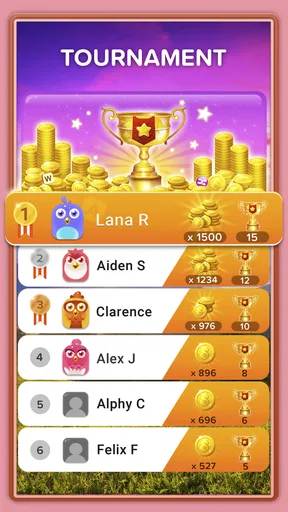
On the other hand, players who want extensive customization, multiplayer competition, or a visible leaderboard should look elsewhere. Those features would change the focus from private problem solving to comparison and performance. This game’s quieter design is a strength for me, but it is also the reason it will not satisfy every word-game audience.
Small strategies that make the experience better
My first recommendation is to use pauses strategically. When a puzzle stops making sense, I do not keep tapping through the same idea. I look away for a moment, return, and try to see the letters as separate building blocks. That break is surprisingly useful because word recognition often becomes harder when I force it.
Second, I try not to judge a session by speed. The game’s value is in the quality of attention it demands, not in finishing every challenge as quickly as possible. A slower solution that reveals a new pattern is more useful than a rushed sequence of guesses. This mindset also makes the difficulty curve feel fairer.
Third, I use the progression as a personal stopping marker. Completing a stage or reaching a natural transition gives me a clean place to put the phone down. This is especially helpful during work breaks, because I can enjoy the game without letting an open-ended loop consume more time than intended.
Finally, I would play with a dictionary nearby only if my goal were vocabulary curiosity, not score or completion. Looking up a word can turn a frustrating moment into a learning opportunity, but it also changes the challenge. I prefer to solve independently first and investigate afterward, so the answer still feels earned.
My verdict on the long-term progression
Word Trails NETFLIX succeeds because its goals, unlocks, challenge, and pacing support one another without becoming complicated. The early puzzles are welcoming, the progress path gives each completion a reason, and the increasing difficulty encourages a more flexible way of thinking. I never felt that I needed to master a large system before enjoying the game.
Its retention strength is gentle rather than aggressive. I return because I like the feeling of working through a word problem and seeing steady advancement, not because the game overwhelms me with demands. That makes it a good companion for short breaks, quiet evenings, and anyone who wants a phone game that exercises attention without turning every session into a contest.
There are clear boundaries. It is not the best pick for players seeking speed, social competition, deep narrative, or formal language instruction. Some experienced word-game fans may also want tougher variety sooner. But for a broad audience looking for a polished, approachable word title, the balance is convincing.
My final recommendation is simple: choose it if you want calm, structured word puzzles with meaningful forward movement. With an Everyone rating, a free entry point, a 4.7 average, and a mature progression framework already attracting over one million installs, it is easy to try. More importantly, it gives each session a clear purpose while leaving enough room for your own pace. I would keep it installed for those moments when I want to exercise my brain without feeling as though I have started another demanding task.
Verdict
Strengths of Word Trails NETFLIX
- Relaxing word puzzles suitable for short or extended play sessions.
- Netflix membership provides access without separate in-game purchases.
- Simple controls make it easy to play on phones and tablets.
- Progressive difficulty keeps familiar word searches engaging.
- Offline play is useful when traveling or away from reliable internet.
Limitations of Word Trails NETFLIX
- Requires an active Netflix subscription to access the game.
- Some puzzles may feel repetitive after extended daily play.
- Limited appeal for players seeking competitive multiplayer features.
- Hints and mistakes can reduce the challenge for experienced players.
- Availability may vary by region, device, or Netflix account settings.
Other Releases by Netflix, Inc.
View All
Netflix
Entertainment4.8

Sonic Mania Plus - NETFLIX
Action4.5

Bloons TD 6 NETFLIX
Strategy4.6

Football Manager 26 Mobile
Sports4.3
Similar Picks in This Category
View All
Word Search - Word Puzzle Game
Bluetile4.8

Word Search Quest - Puzzles
Blackout Lab4.8

CodyCross: Crossword Puzzles
Fanatee, Inc.4.7

Words of Wonders: Crossword
Fugo Games4.9

Wordscapes: Word puzzle game
PeopleFun4.7

Word Search Explorer
PlaySimple Games4.9
Frequently Asked Questions
What is Word Trails NETFLIX?
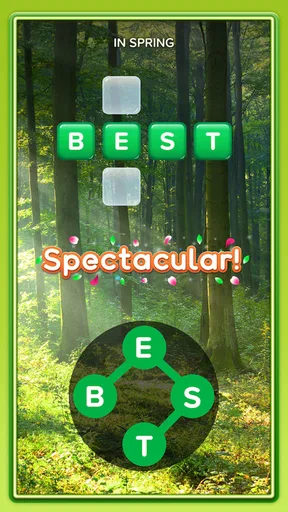
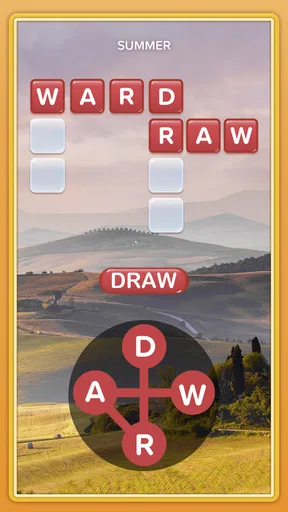
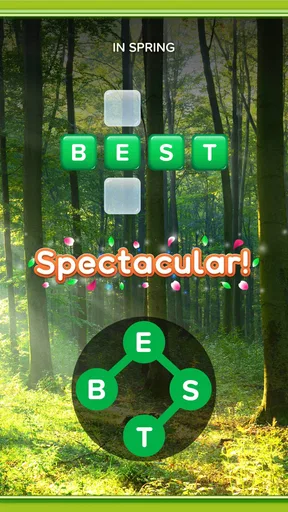
Word Trails NETFLIX is a word puzzle game available through Netflix Games for supported Android and iOS devices. It combines crossword-style boards with a word-search mechanic: you connect letters to form answers and progress along themed trails. The game is designed for short sessions but includes enough stages and increasing difficulty to keep regular players engaged.
Do I need a Netflix subscription to play Word Trails NETFLIX?
Yes. Word Trails NETFLIX is generally included with a qualifying Netflix membership, so you do not purchase the game separately or deal with traditional in-game advertising. You usually need to sign in with your Netflix account when launching it. Availability can depend on your subscription, device, region, and the current Netflix Games catalog.
Can I play Word Trails NETFLIX offline?
Word Trails NETFLIX is suitable for playing without a continuous internet connection after the game has been installed and initially prepared on your device. However, you may occasionally need to reconnect so Netflix can verify your account, download updates, or synchronize certain data. Offline behavior can vary between devices, so it is best to launch the game online before traveling.
Is Word Trails NETFLIX suitable for beginners and children?
The game is approachable for beginners because its basic controls are simple: select or connect letters to create words and complete each puzzle. Difficulty gradually increases, making early levels useful for learning the mechanics. Nevertheless, some later puzzles may require a broader vocabulary. Parents should also review Netflix’s age rating and device controls before allowing younger children to play.
Does Word Trails NETFLIX contain ads or paid items?
One of the main benefits of Word Trails NETFLIX is that the standard Netflix Games experience does not rely on third-party advertising, energy timers, or separate pay-to-win purchases. Access is tied to the Netflix membership rather than individual level purchases. You should still check the current store listing and Netflix terms, since features, account requirements, and availability may change over time.
Play our best games!


